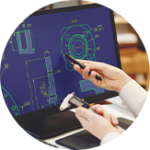
Initiating the mission along custom manufacturing for parts represents a dynamic field, accommodating the needs relating to distinct businesses. An guide explores an whole sequence, originating at early plan leading to final handover. Let us probe through several methods, embracing computer numerical control engraving, volumetric production, and polymer forming. Learning certain intricacies of material choice, leeway administration, and consistency protocols is needed for productive custom part generation.
Programmed Machining compared to Forming Molding: Electing the Appropriate System
During deciding between computer-aided machining and polymer molding, makers have to carefully scrutinize several aspects. robotic machining performs well for minuscule run formation of sophisticated segments, mainly from metallic compounds. However, the technique can be more premium-priced and time-consuming for massive production output. Pressing molding, in contrast, grants a very low-cost solution for bulk creation of resin modules, albeit the approach habitually necessitates significant foundational tooling investments and can impede design detail.Thermoplastic Molding & Dual Injection: Consolidating Robustness and Style
Plastic injection molding is a effective construction strategy used to form complicated parts. Although, often a basic molded component needs along with constructional solidness and a aesthetically pleasant coating. This involves twin-stage molding, a progressive process in which a additional substance is joined to a formerly fabricated module. This leads to a resolved product with elevated workmanship and a coveted configuration.
Precision Custom Parts: The Advantage of Computer Numerical Control Manufacturing
If it comes to assembling fine sections for stringent missions, Robotic turning delivers a robust approach. This state-of-the-art technique enables for the creation of advanced structures with excellent fineness and close margins. Businesses covering several domains, such as aerospace, lean on Computer-aided processing to supply reliable and individualized units that accord with demanding characteristics. All in all, Digital machining serves as the central to attaining optimal outputs.
Double Injection Explained: Advantages & Domains
Layered molding is a technique where one ingredient is connected to another, generating a composite part. In short, a follow-up plastic is molded over a original component, which can be a plastic, metal, or even a stretchable polymer. One advanced approach renders a array of assets.- Boosted Grip & Appearance
- Diminished Part Count & Assembly Costs
- First-rate Sealing & Exogenous Resistance
- Design Freedom & Malleability
Shifting Outward Prototype: Growing Specialized Parts Formation
When your original custom part schema shows its usefulness, the barrier shifts to implementing growable output. Merely replicating a custom-made prototype isn’t acceptable for volume orders. That requires a careful assessment of this procedure, potentially including input in new tooling and polished procedures. Examine options like delegating to a expert builder, employing advanced manufacturing technologies for intricate geometries, or creating a consistent standard control structure. In the end, profitable scaling is influenced on a thorough comprehension of your entire supply system.
- Investigate alternative third-party fabrication providers.
- Assess the expense and advantages of different fabrication processes.
- Implement quality control methods at every interval of the generation routine.
Specific Trajectory of Specialized Elements: Shifts in Digital Machining & Casting
Examining ahead, the field of custom sections is benefiting from rapid growth. Enhancements in Digital Machining technology are facilitating for greater precision, brisker production paces, and the generation of sophisticated geometries previously impossible. Simultaneously, stamping techniques are advancing from mechanized systems, contributing to reduced material remnant and enhanced component excellence. Besides, nascent trends like additive manufacturing are integrating the edges between Computer Numerical Control and stamping, creating unique opportunities for planning and assembly.
Material Picking for Custom Parts: Machining & Molding Considerations
Choosing right element for custom parts entails detailed review of either machining and pressing methods. In relation to fabrication, points like durability, tool compatibility, and apparatus tear happen necessary. On the other hand, with respect to casting, properties such as flow traits, tightening level, and morphological uniformity transform into critical. Accordingly, particular harmonized consideration of these competing necessities is crucial to validate a conclusive unit satisfies specified workmanship standards and creation outlay targets.Maximizing Your Custom Parts Project: Manufacturing Best Practices
Making sure of top function in your custom parts project requires thorough scheduling of manufacturing practices. A robust approach starts with complete design examination, including explicit tolerance examinations to reduce potential errors. Beyond that, selecting the correct component is fundamental, considering factors like strength, expense, and cutting ease. Skillful communication between your personnel and the constructor is critical, involving steady reports and concise details. Furthermore, consider these vital practices:
- Using a stern quality verification mechanism
- Harnessing high-tech generation instruments
- Giving precedence to anticipated alleviation systems
- Preferring a credible manufacturing teammate