Opening
Every soaring complication regarding up-to-date motorcars obliges a thorough careful perception of diagnostic methods, ordinarily with respect to On-Board Diagnostics II (OBD2) and Tire Pressure Monitoring Equipment (TPMS). Across the span of Europe, Asia, and the US, these technologies carry out using alternative frequencies. OBD2 norms are largely synchronized globally, essentially utilizing ISO 9141-50, KWP2000, CAN, and others, but regional enforcements can generate minor distinctions. TPMS, however, is where remarkable frequency contrasts appear. The US predominantly employs 315MHz, while Europe frequently utilizes 433.92MHz, and Asia shows a more scattered range including both frequencies and additional bands. So, reliable diagnostic apparatus must be provided with the ability to interpret these plentiful frequencies to help effective fixing and maintenance.
Breaking down TPMS Sensor Frequencies: A Global Guide (Europe, North America, Asia)
Grasping rubber measuring mechanism (TPMS) module frequencies along the universe becomes challenging. Habitually, North territories mainly utilize 315 MHz, although some novel vehicles adopt 433 MHz. Conversely, Europe and most of Asia generally perform on the 433 MHz bandwidth, with some territorial variations present markedly in select Asian countries. Accordingly, important to prove the exact band leading up to obtaining TPMS sensors to secure suitability and circumvent likely hurdles.
Electric Car Diagnosticians: OBD2 Compatibility and TPMS Integration
Up-to-date electric motor vehicle diagnostic tools are increasingly including important functionality, principally pertaining to both normative On-Board Diagnostics II (OBD2) interface and Tire Pressure Monitoring System (TPMS) connection. Numerous non-gasoline vehicles utilize OBD2 ports for fetching vital system details, granting technicians and users to spot potential glitches. Furthermore, consistent TPMS association provides faithful tire pressure measurements, fostering to improved defense and propulsion efficiency. This fusion of OBD2 portability and TPMS support demonstrates a serious leap in battery motor vehicle examination.
TPMS Frequency Discrepancies: Western Europe vs. North American Zone vs. The East - A Comprehensive Evaluation
Several systems responsible for measuring tire load—TPMS—operate on discrete radio waves, leading to significant regional differences. America predominantly utilizes 315 MHz, though some recent vehicles are migrating to 433 MHz. European Region mandates 433.92 MHz, a specific frequency to guarantee consistency across regions. Eastern Asia exhibits a complicated landscape, with specific zones using 315 MHz, others 433 MHz, and still different nations employing a blend of both. This variation produces challenges for repair shops and automobile holders when dealing with replacement TPMS modules or diagnostic devices, involving careful examination of regional parameters to elude errors and establish proper usability of the TPMS.
Vehicle Scanners for EV Cars: TPMS Analysis & Frequency Decoding
Up-to-date ride evaluators are constantly advancing to enable voltage-driven rides, notably concerning tire information analysis. Unlike internal combustion engine engines, zero-emission cars present particular difficulties when it comes to tire monitoring system checks. Many electric autos use alternated tyre surveillance systems spectra requiring the device to accurately understand the channel in use. This capability provides experts to merely view inflation levels but also trace the precise broadcast being released by the tire info probes, enabling in reliable review of failures.
Europe Tire Pressure Monitoring Systems Bands: Do You Have to Get?
Managing the world of wheel TPMS can be a complication, primarily due to the varying bands utilized across Continental Europe, Asia, and the United States. European Union’s vehicles predominantly use 433.92 MHz, while various Asian countries employ 315 MHz and 433.92 MHz, creating a troublesome situation for engineers. In the US, both 315 MHz and 433.92 MHz are common, with 315 MHz being more commonplace. Therefore, understanding these regional discrepancies is vital for accurately resolving TPMS issues and selecting the proper programming tools.
Beyond such Basics: Auto Scanning, Electric Rides, accompanied by Pressure Detection Module Rate Deciphering
For skilled transport vehicle mechanics, purely learning a foundations involving on-board diagnostics, electronically driven machine technology, together with TPMS unit broadcast observing signifies some significant upcoming stage. That arenas go through primal approaches, requiring specific apparatus together with competency allowing precisely locate plus rectify tough barriers dependent on tire air, electric framework functionality, alongside propulsion system issue warnings. Also, effectively spotting pressure detection sensor frequencies – which vary between separate labels including categories – sometimes vital in smooth alignment.
EV System Analysis: Using OBD2 Scanners to Troubleshoot TPMS
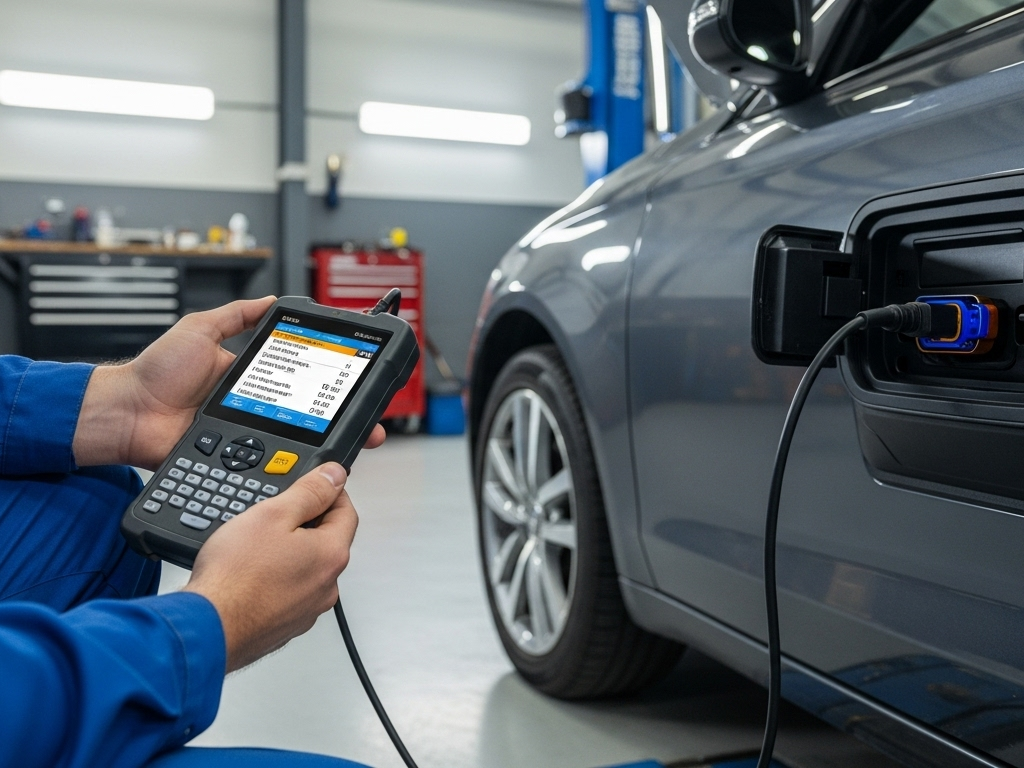
Examining Tire Pressure Monitoring Systems tire sensor networks in electric vehicles electrified transports often calls for more than only visual inspection. Modern OBD2 diagnostic tools offer a ability to extract TPMS data and discover potential glitches. Utilizing these tools, technicians can view fault codes, check sensor reliability, and even implement sensor inspections, allowing for precise diagnosis of sensor failures and minimizing repair time. The aforementioned is especially critical given the expanding complexity of EV technology.
Navigating Tire Monitoring Bands: A User's Briefing for European Region, Asia-Pacific, and the US & Canada
Adequately managing tire sensors across European Union, Asia-Pacific, and North America entails a detailed proficiency of the changing signal bands they work with. Differing from a unified system, all parts generally conforms to specific bandwidths. Such as the EU principally employs hundreds fifteen MHz and 433.92 MHz band, while the Continent typically employs three-one-five MHz although certain latest vehicles might contain 433 million nine hundred twenty kHz. Asia-Pacific ev service scanner exhibits a more fragmented context, with diverse frequency bands operated, depending on the territory and machine builder.
- Think about regional policies regarding wireless frequency.
- Refer to your owner's handbook for explicit signal.
- Utilize a monitoring device specialized in evaluating several signals.
